link here The Ultimate n8n AI Automation Guide is a practical, step-by-step guide to building powerful AI-powered workflows with n8n — without requiring advanced coding skills . Automation is no longer just for developers. With n8n and modern AI tools, you can connect applications, process information, generate content, automate repetitive tasks, and build intelligent workflows that work for you around the clock. This book takes you from the fundamentals of workflow automation to building more advanced AI-powered systems. Instead of focusing only on theory, it emphasizes practical concepts, real-world use cases, and repeatable systems that you can adapt to your own projects, business, or daily workflow. What You’ll Learn Understand how n8n works and how to think in workflows Build automated workflows from scratch Connect different apps, services, APIs, and data sources Integrate AI into your automation workflows Automate repetitive business and productivity tasks Work with trigg...
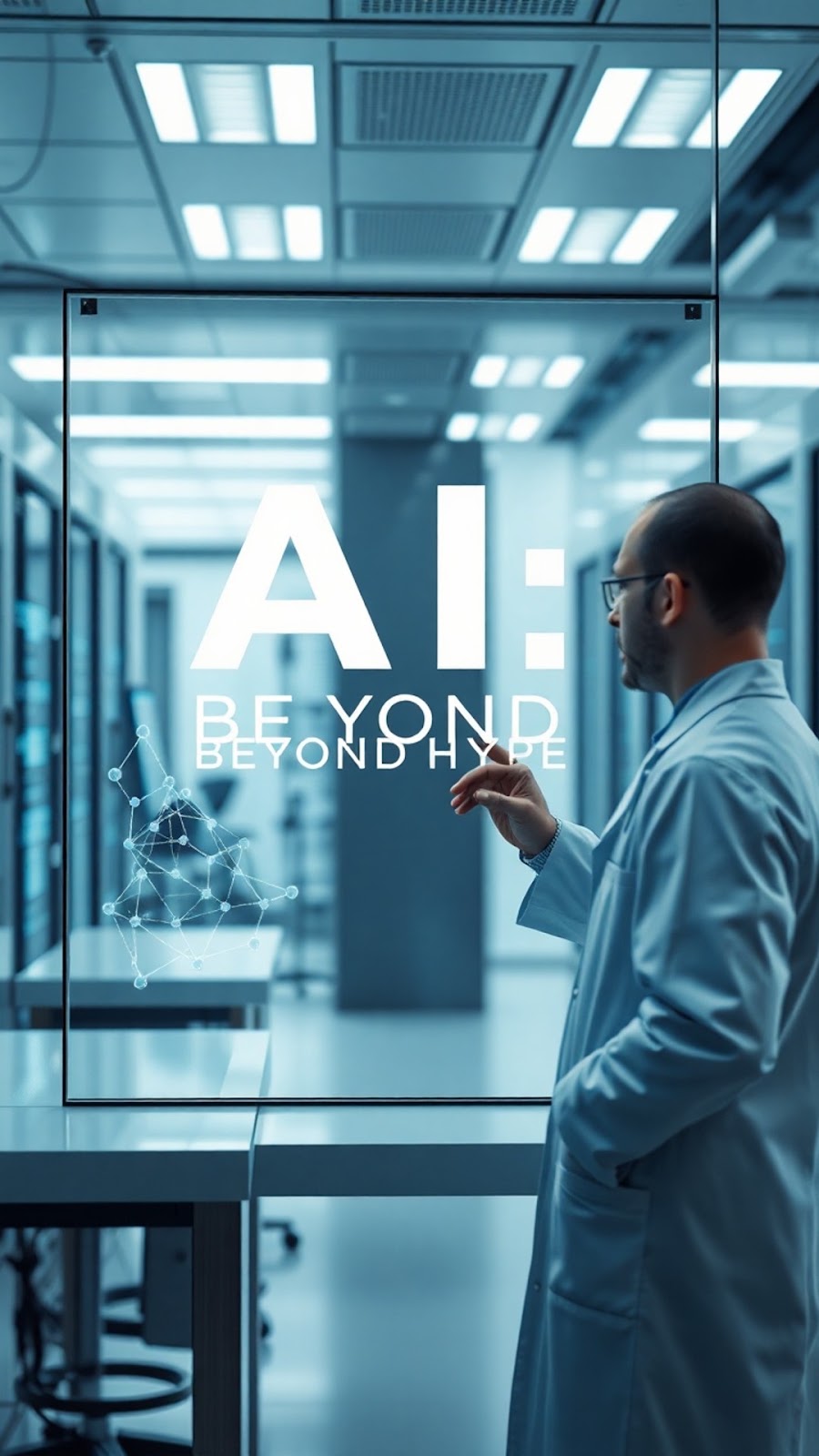
AI's True Power: Beyond the Hype
We’re living through a seismic shift. Artificial Intelligence, once a distant whisper in academic labs, is now a roaring presence in every board room and every consumer's pocket. The headlines scream about generative AI, about chatbots that write essays, and algorithms that predict our every move. But as a CEO who’s navigated the choppy waters of technological evolution for two decades, I see beyond the immediate spectacle. The true power of AI isn't in its ability to mimic human creation; it's in its capacity to **redefine human potential**.
From Automation to Augmentation
For years, the AI conversation was dominated by automation. Could a machine do a job faster, cheaper, and with fewer errors than a human? The answer, increasingly, is yes. We’ve seen AI revolutionize manufacturing, logistics, and even customer service through chatbots that handle routine inquiries. This is valuable, undeniably. But it’s only the first act. The true revolution lies in **augmentation** – how AI can elevate human capabilities, making us more creative, more insightful, and more effective than ever before.
Think about a diagnostic radiologist. AI doesn't replace them; it acts as a hyper-intelligent co-pilot. It can sift through thousands of scans in minutes, flagging subtle anomalies that might escape the human eye after a long shift. This allows the radiologist to focus their expertise on complex cases, on patient consultation, and on delivering a higher standard of care. This isn't about replacing doctors; it's about empowering them to save more lives.
Unlocking Unseen Opportunities
The strategic advantage of AI lies in its ability to process and analyze data at a scale and speed that's simply impossible for humans. This unlocks opportunities we couldn't have conceived of just a few years ago. Consider drug discovery. Traditionally, this has been a years-long, multi-billion-dollar endeavor. Now, AI can simulate molecular interactions, predict compound efficacy, and identify promising candidates at an unprecedented pace. Companies like DeepMind's AlphaFold have already demonstrated AI's ability to predict protein structures, a monumental leap forward for understanding biology and developing new treatments.
In my own organization, we're using AI not just to optimize existing processes, but to identify entirely new markets. By analyzing vast datasets of customer behavior, economic indicators, and emerging trends, AI can pinpoint unmet needs and forecast demand for products and services that don't yet exist. This isn't just about incremental improvement; it's about **strategic foresight**.
The Human Element: Irreplaceable and Enhanced
Despite the rapid advancements, let’s be clear: the most valuable component of any organization remains the human element. AI can analyze data, but it cannot replicate human empathy, intuition, or complex ethical reasoning. These are the skills that drive innovation, build trust, and foster genuine connection.
My vision for AI-powered businesses isn't one where humans are sidelined, but one where they are liberated. Liberated from the mundane, the repetitive, and the computationally intensive. This frees up our teams to:
- Focus on strategic problem-solving: Tackle the 'wicked problems' that require human ingenuity and creative thinking.
- Drive deeper customer relationships: Build rapport, understand nuanced needs, and deliver personalized experiences.
- Foster groundbreaking innovation: Spend time on ideation, experimentation, and the development of truly disruptive ideas.
- Lead with ethical considerations: Ensure that AI deployment is responsible, fair, and aligned with our company's values.
Navigating the Future: A Call to Action
The companies that will thrive in this AI-driven era are not necessarily the ones with the most advanced algorithms, but the ones that best integrate AI into their human-centric strategies. This requires a proactive approach, not a reactive one.
Here’s how leaders can start preparing today:
- Cultivate AI literacy: Ensure your teams, from the frontline to the executive suite, understand the potential and limitations of AI.
- Identify high-impact use cases: Don't chase every shiny new AI trend. Focus on applications that solve real business problems and create tangible value.
- Invest in data infrastructure: High-quality, well-governed data is the fuel for any successful AI initiative.
- Prioritize ethical AI development: Establish clear guidelines for AI use and ensure fairness, transparency, and accountability.
- Foster a culture of continuous learning: The AI landscape is evolving at breakneck speed. Encourage experimentation and adaptation.
Looking Ahead: The Augmented Enterprise
The future isn't about machines versus humans; it's about the **augmented enterprise**. Imagine a sales team, powered by AI insights, that knows precisely when and how to engage each prospect, anticipating their needs before they even articulate them. Picture a marketing department using AI to craft hyper-personalized campaigns that resonate deeply with individual consumers. Envision R&D teams accelerating discovery cycles, bringing life-changing innovations to market faster than ever before.
This is the tangible power of AI. It’s the amplification of our own intelligence, the liberation of our most valuable human assets, and the creation of a competitive advantage that is both profound and sustainable. The hype is fading, but the real work – the transformative work – is just beginning. Are you ready to lead your organization into this augmented future?
Comments
Post a Comment