link here The Ultimate n8n AI Automation Guide is a practical, step-by-step guide to building powerful AI-powered workflows with n8n — without requiring advanced coding skills . Automation is no longer just for developers. With n8n and modern AI tools, you can connect applications, process information, generate content, automate repetitive tasks, and build intelligent workflows that work for you around the clock. This book takes you from the fundamentals of workflow automation to building more advanced AI-powered systems. Instead of focusing only on theory, it emphasizes practical concepts, real-world use cases, and repeatable systems that you can adapt to your own projects, business, or daily workflow. What You’ll Learn Understand how n8n works and how to think in workflows Build automated workflows from scratch Connect different apps, services, APIs, and data sources Integrate AI into your automation workflows Automate repetitive business and productivity tasks Work with trigg...
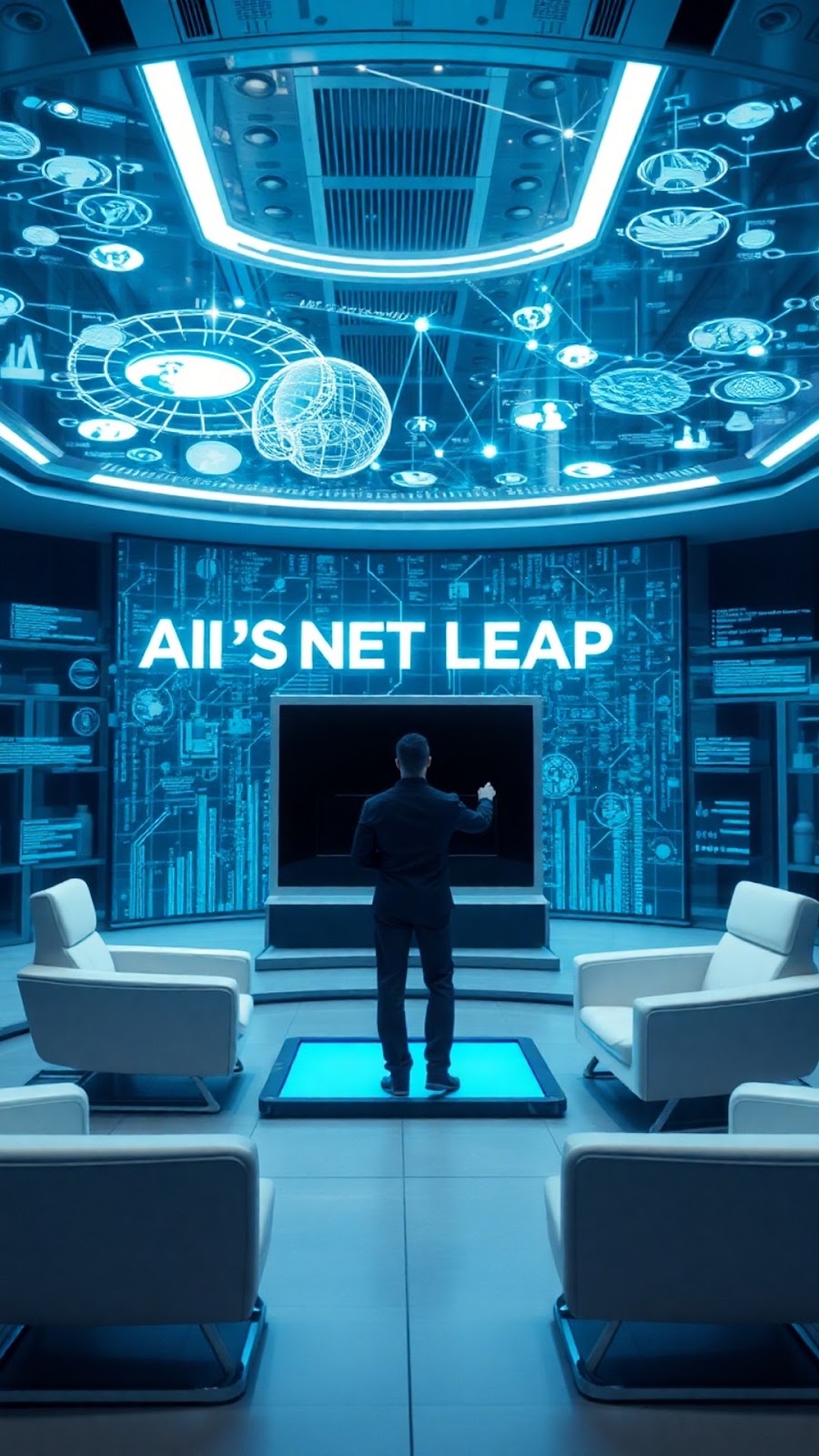
AI's Next Leap: Your Competitive Edge
As a CEO who has navigated the seismic shifts of technological evolution for over two decades, I've seen trends emerge, mature, and sometimes, fade into obscurity. But the current trajectory of Artificial Intelligence isn't just a trend; it's a fundamental redefinition of what's possible. We are standing at the precipice of AI's next great leap, and for businesses that wish to thrive, not just survive, understanding and harnessing this power is no longer optional – it's imperative.
Beyond Automation: The Dawn of Generative Intelligence
For years, AI's primary impact was felt in automation and data analysis. It was about efficiency, about doing existing tasks faster and cheaper. While these gains are significant, the real revolution is happening now with generative AI. We're moving from AI that *understands* to AI that *creates*. Think about it: AI can now write code, design products, compose music, generate marketing copy, and even craft complex strategic plans. This isn't science fiction; this is the engine of innovation available today.
The Strategic Imperative: Leading with AI
My leadership philosophy has always been about anticipating the future and positioning our organization to lead. The advent of sophisticated AI tools demands a strategic pivot. It's not enough to dabble; we must integrate AI deeply into our core operations, from product development and customer engagement to internal processes and strategic decision-making. This requires a multi-faceted approach:
- Visionary Leadership: CEOs must champion AI adoption, not just as a technological upgrade, but as a strategic advantage. This means fostering a culture of experimentation and learning.
- Talent Augmentation: AI isn't here to replace humans, but to augment their capabilities. We need to invest in reskilling and upskilling our workforce to collaborate effectively with AI tools, turning our teams into super-powered problem-solvers.
- Data as the New Oil (Refined): The quality and accessibility of data are paramount. Generative AI thrives on vast, well-structured datasets. Investing in robust data governance and infrastructure is non-negotiable.
- Ethical Frameworks: With great power comes great responsibility. Establishing clear ethical guidelines for AI development and deployment is crucial to build trust and avoid unintended consequences.
Real-World Impact: Early Adopters Lead the Pack
We're already seeing the transformative power of generative AI across industries. Consider these examples:
- Software Development: Companies are using AI code assistants to accelerate development cycles by up to 50%, allowing engineers to focus on complex architecture and innovation rather than routine coding.
- Marketing & Sales: Personalized customer journeys, hyper-targeted ad copy, and even AI-generated sales scripts are leading to higher conversion rates and increased customer satisfaction. Imagine an AI that can draft five distinct marketing campaigns tailored to different customer segments in minutes, all while ensuring brand consistency.
- Healthcare: AI is revolutionizing drug discovery by predicting molecular interactions, and personalizing treatment plans based on individual patient data, leading to faster diagnoses and more effective therapies.
- Content Creation: From drafting initial blog posts and social media updates to generating video scripts and creating visual assets, AI is democratizing content creation and enabling businesses to scale their reach exponentially.
The Future is Here: Predictions and Projections
Looking ahead, the capabilities of AI will only expand. I foresee a future where:
- AI as a Co-Pilot for Every Professional: Expect AI to become an indispensable partner in nearly every role, from legal advisors drafting briefs to financial analysts performing complex risk assessments.
- Hyper-Personalized Everything: Products, services, education, and entertainment will be tailored to individual preferences and needs on an unprecedented scale.
- Autonomous Strategic Planning: AI will assist in scenario planning, identifying emerging market opportunities, and even proposing long-term strategic directions, all based on continuous analysis of global trends.
- The Rise of the 'AI-Native' Enterprise: Businesses built from the ground up with AI at their core will possess inherent advantages in agility, efficiency, and innovation.
Actionable Insights: Your Next Steps
For those not yet fully embracing AI, the time to act is now. Here's how you can begin:
- Educate Yourself and Your Team: Stay abreast of AI developments. Host workshops, bring in experts, and encourage continuous learning.
- Identify Key Use Cases: Start small. Where can AI deliver the most immediate and impactful value within your organization?
- Experiment and Iterate: Don't be afraid to pilot AI tools. Learn from the results, adapt your approach, and scale what works.
- Focus on Human-AI Collaboration: Develop strategies that empower your employees to leverage AI, rather than fear it.
- Build a Strong Data Foundation: Ensure your data is clean, accessible, and secure. This is the bedrock of effective AI.
The Unstoppable Momentum
The AI revolution is not a distant event; it is the present reality shaping our future. The companies that embrace this transformative technology with vision, strategy, and a commitment to ethical implementation will not only lead their industries but will redefine them. The question is no longer *if* AI will change your business, but *how* and *when* you will leverage its power to your advantage. The competitive landscape is being redrawn at an accelerated pace. Will you be the architect of your future, or a spectator in someone else's?
Comments
Post a Comment