link here The Ultimate n8n AI Automation Guide is a practical, step-by-step guide to building powerful AI-powered workflows with n8n — without requiring advanced coding skills . Automation is no longer just for developers. With n8n and modern AI tools, you can connect applications, process information, generate content, automate repetitive tasks, and build intelligent workflows that work for you around the clock. This book takes you from the fundamentals of workflow automation to building more advanced AI-powered systems. Instead of focusing only on theory, it emphasizes practical concepts, real-world use cases, and repeatable systems that you can adapt to your own projects, business, or daily workflow. What You’ll Learn Understand how n8n works and how to think in workflows Build automated workflows from scratch Connect different apps, services, APIs, and data sources Integrate AI into your automation workflows Automate repetitive business and productivity tasks Work with trigg...
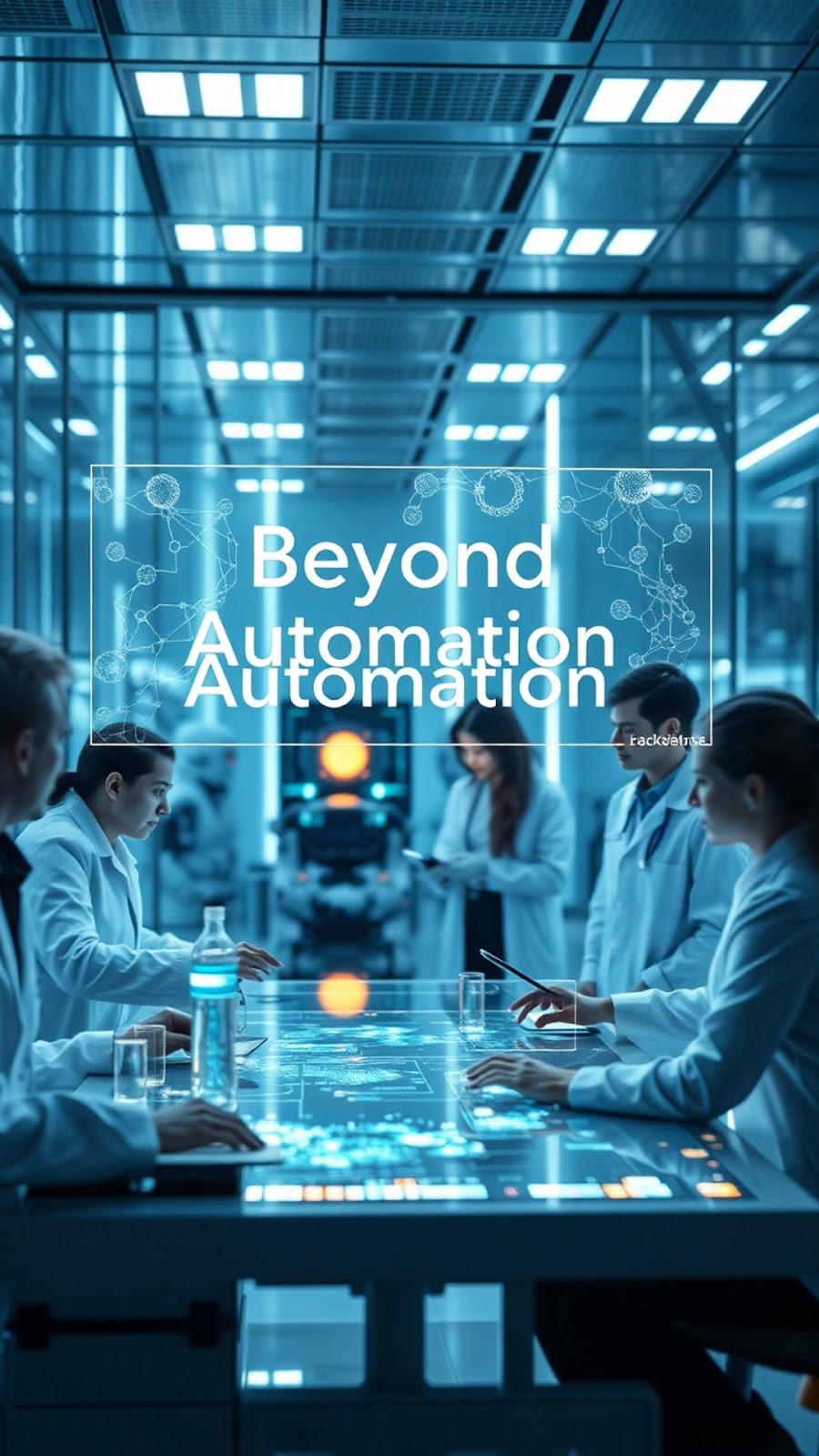
AI's Next Leap: Beyond Automation
For years, the conversation around Artificial Intelligence has been dominated by one word: automation. We've marveled at AI's ability to streamline processes, crunch data at speeds humans can only dream of, and perform repetitive tasks with unerring accuracy. As a CEO who has navigated the tectonic shifts of technological evolution, I’ve seen firsthand how AI has reshaped industries, from manufacturing floors to financial markets. Yet, I believe we are standing at the precipice of a profound shift – a move beyond mere automation towards a new era of AI-driven augmentation and strategic partnership.
The Automation Plateau
The initial wave of AI adoption focused on replacing manual labor and optimizing existing workflows. This was, and still is, incredibly valuable. Think of chatbots handling customer service inquiries, algorithms predicting inventory needs, or AI assisting in medical diagnoses. These applications have undeniably boosted efficiency and reduced operational costs. However, the true transformative power of AI lies not in its ability to *do* what we do, but in its capacity to help us do it *better*, smarter, and with unprecedented insight.
We're reaching a point where the incremental gains from pure automation are diminishing for many organizations. The real competitive advantage will emerge from those who can harness AI to amplify human capabilities, fostering innovation and strategic decision-making at a level previously unimaginable.
Augmentation: The Human-AI Symbiosis
The next frontier isn't about replacing humans; it's about empowering them. This is the era of AI augmentation. Imagine a world where:
- Creative Professionals use AI not just for content generation, but as a sophisticated brainstorming partner, exploring novel design concepts or narrative arcs that might otherwise remain undiscovered.
- Scientists and Researchers leverage AI to sift through vast datasets, identify complex correlations, and formulate hypotheses that accelerate scientific breakthroughs. The recent advancements in drug discovery are a prime example.
- Business Leaders can utilize AI-powered predictive analytics to understand market dynamics, anticipate customer behavior, and identify nascent opportunities with remarkable foresight, moving from reactive to proactive strategy.
- Educators deploy AI to personalize learning paths for students, identifying individual strengths and weaknesses to provide tailored support and foster deeper understanding.
This symbiosis allows us to offload the cognitive heavy lifting of data processing and pattern recognition to AI, freeing up human minds for critical thinking, creativity, emotional intelligence, and complex problem-solving – the very skills that define our humanity and drive true innovation.
Strategic Partnership: AI as a Co-Pilot
Beyond augmentation, AI is evolving into a strategic partner. This means integrating AI into the very fabric of our strategic planning and decision-making processes. Think of AI not as a tool on the desk, but as a co-pilot in the cockpit of your business.
Real-World Example: At a leading tech firm I’ve advised, AI was used to analyze millions of customer interactions, not just to categorize issues, but to identify subtle shifts in sentiment and emerging product desires. This insight directly informed their next-generation product roadmap, allowing them to launch features that resonated deeply with their user base, outpacing competitors who were still relying on traditional market research methods.
This isn't about delegating decisions; it's about enhancing the quality of those decisions. AI can present multiple scenarios, forecast their likely outcomes, and highlight potential risks and opportunities with a clarity that surpasses human analysis alone. This empowers leaders to make more informed, data-driven, and ultimately, more successful strategic choices.
Navigating the Future: Actionable Insights
For CEOs and business leaders, embracing this shift requires a proactive approach. Here’s how to prepare:
- Foster an AI-Literate Workforce: Invest in training and development to ensure your teams understand AI's capabilities and limitations, and can effectively collaborate with AI systems.
- Prioritize Ethical AI Deployment: As AI becomes more integrated into decision-making, ethical considerations around bias, transparency, and accountability become paramount. Build robust governance frameworks.
- Identify Augmentation Opportunities: Look beyond simple automation. Where can AI amplify your team's existing strengths and unlock new levels of creativity and strategic thinking?
- Build for Adaptability: The AI landscape is evolving at an unprecedented pace. Your technology infrastructure and organizational culture must be agile enough to adapt to new breakthroughs.
Future Predictions: The Intelligent Enterprise
Looking ahead, I foresee the rise of the truly "intelligent enterprise." These organizations will be characterized by seamless human-AI collaboration, where AI acts as an intuitive extension of human intellect. We'll see AI not only predict but also prescribe optimal courses of action, drive hyper-personalized customer experiences, and even contribute to the ethical governance of complex systems.
The competitive landscape will be redrawn by those who can cultivate this symbiotic relationship, moving beyond the efficiency gains of automation to unlock the strategic power of AI augmentation. This is not a future to be feared, but one to be actively shaped.
A Call to Action
The time to move beyond the automation narrative is now. It’s time to ask bigger questions: How can AI help us think bigger? How can it amplify our ingenuity? How can it make us better strategists, better innovators, and ultimately, better leaders? The companies that answer these questions with bold vision and strategic implementation will not only survive the AI revolution, but thrive within it, charting a course towards unprecedented growth and impact.
Comments
Post a Comment