link here The Ultimate n8n AI Automation Guide is a practical, step-by-step guide to building powerful AI-powered workflows with n8n — without requiring advanced coding skills . Automation is no longer just for developers. With n8n and modern AI tools, you can connect applications, process information, generate content, automate repetitive tasks, and build intelligent workflows that work for you around the clock. This book takes you from the fundamentals of workflow automation to building more advanced AI-powered systems. Instead of focusing only on theory, it emphasizes practical concepts, real-world use cases, and repeatable systems that you can adapt to your own projects, business, or daily workflow. What You’ll Learn Understand how n8n works and how to think in workflows Build automated workflows from scratch Connect different apps, services, APIs, and data sources Integrate AI into your automation workflows Automate repetitive business and productivity tasks Work with trigg...
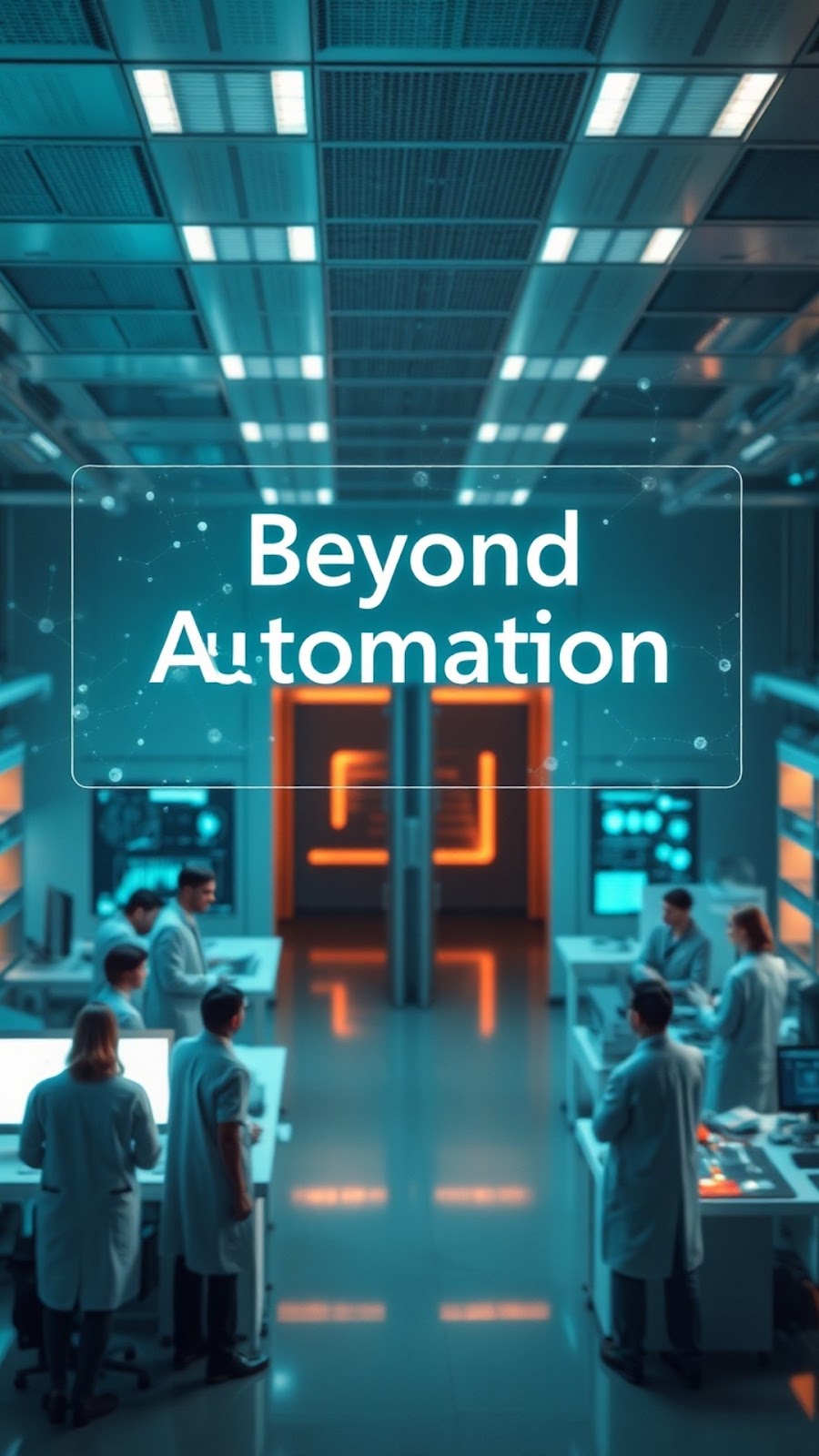
AI's Next Leap: Beyond Automation
As a CEO who has navigated the choppy waters of technological disruption for over two decades, I've witnessed firsthand the transformative power of innovation. From the dawn of the internet to the mobile revolution, each wave has reshaped industries and redefined what's possible. Today, we stand at the precipice of another seismic shift, one driven by Artificial Intelligence. But this time, the conversation isn't just about automation; it's about augmented intelligence, about unlocking unprecedented human potential.
The Automation Plateau
For years, the dominant narrative around AI has been its ability to automate repetitive tasks, boost efficiency, and reduce costs. And indeed, AI has delivered spectacularly on this front. Think of customer service chatbots handling common queries, AI algorithms optimizing supply chains, or predictive maintenance systems preventing costly breakdowns. These are undeniable wins, foundational to modern business operations.
However, I believe we've reached an 'automation plateau' of sorts. The low-hanging fruit has been plucked. To achieve the next level of growth and competitive advantage, we must move beyond simply replacing human effort with algorithms. The true power of AI lies in its capacity to amplify our innate human abilities – our creativity, our strategic thinking, our empathy.
Enter Augmented Intelligence
Augmented intelligence, a term I've come to favor, represents a symbiotic relationship between humans and AI. It's not about AI replacing us, but about AI empowering us to do our jobs better, faster, and more impactfully than ever before. It's about leveraging AI as a co-pilot, a strategic advisor, and a creative muse.
Consider the field of drug discovery. Traditionally, this was a painstaking, iterative process involving vast teams of scientists. Now, AI can sift through millions of molecular compounds, identify potential candidates, and even predict their efficacy and side effects with remarkable speed. This doesn't replace the brilliant minds of researchers; it accelerates their work, allowing them to focus on the complex problem-solving and experimental design that only humans can provide.
In my own organization, we're seeing this in action. Our R&D teams, armed with AI-powered analytical tools, are no longer bogged down in data wrangling. Instead, they're spending more time hypothesizing, experimenting, and innovating. This has led to a significant increase in our product development velocity and the originality of our solutions.
The CEO's New Mandate
For us as leaders, the mandate is clear: we must foster environments where this human-AI collaboration can flourish. This requires a multi-pronged approach:
- Strategic Re-skilling: We need to invest heavily in training our workforce, not just in using AI tools, but in understanding their capabilities and limitations. The focus must shift to skills that complement AI, such as critical thinking, complex problem-solving, creativity, and emotional intelligence.
- Data Democratization with Governance: AI thrives on data. We must ensure our data is accessible, clean, and well-governed. This means breaking down data silos and empowering employees with the tools to extract insights, while maintaining robust security and privacy protocols.
- Ethical AI Frameworks: As AI becomes more integrated into decision-making, establishing clear ethical guidelines is paramount. Transparency, fairness, and accountability must be baked into every AI deployment. We cannot afford to abdicate our responsibility for the outcomes.
- Cultivating a Culture of Experimentation: Innovation with AI requires a willingness to try, to fail, and to learn. Leaders must create a safe space for experimentation, encouraging teams to explore new AI applications without fear of immediate judgment.
Future Gazing: The AI Symphony
Looking ahead, I envision a future where AI acts as a personalized orchestra conductor for our professional lives. Imagine an AI that understands your individual strengths, your project priorities, and your company's strategic goals. It could proactively suggest the best resources, connect you with relevant colleagues, and even help you structure your thinking for a critical presentation.
In the realm of strategic planning, AI could analyze global market trends, geopolitical shifts, and competitive landscapes in real-time, providing CEOs with a nuanced, data-driven perspective to inform our decisions. This isn't about handing over the reins; it's about having the most comprehensive, insightful dashboard imaginable at our fingertips.
The early adopters are already demonstrating this. Companies like NVIDIA, with their focus on AI-powered design tools, and Microsoft, with its integration of AI across its productivity suite, are paving the way. They understand that the next frontier isn't just about computing power, but about intelligent augmentation.
Actionable Insights for Today
So, what can you do, starting today, to prepare for this augmented future?
- Identify Augmentation Opportunities: Look beyond automation. Where in your workflow could AI enhance human creativity, decision-making, or strategic thinking?
- Invest in 'Human' Skills: Prioritize training and development in areas that AI cannot replicate – empathy, critical analysis, ethical reasoning, and collaborative innovation.
- Champion Data Literacy: Encourage your teams to become comfortable with data. Provide accessible tools and training to foster data-driven insights at all levels.
- Start Small, Scale Smart: Begin with pilot projects that demonstrate tangible value from AI augmentation. Learn from these experiments and iterate quickly.
The era of AI as a mere task automator is drawing to a close. The future belongs to those who can harness its power to amplify human ingenuity, foster deeper collaboration, and drive unprecedented innovation. As leaders, our responsibility is to architect this future, ensuring that AI serves as a catalyst for human progress, not a replacement for it.
This isn't just about staying competitive; it's about shaping a more intelligent, more creative, and more prosperous future for all. The time to embrace augmented intelligence is now.
Comments
Post a Comment