link here The Ultimate n8n AI Automation Guide is a practical, step-by-step guide to building powerful AI-powered workflows with n8n — without requiring advanced coding skills . Automation is no longer just for developers. With n8n and modern AI tools, you can connect applications, process information, generate content, automate repetitive tasks, and build intelligent workflows that work for you around the clock. This book takes you from the fundamentals of workflow automation to building more advanced AI-powered systems. Instead of focusing only on theory, it emphasizes practical concepts, real-world use cases, and repeatable systems that you can adapt to your own projects, business, or daily workflow. What You’ll Learn Understand how n8n works and how to think in workflows Build automated workflows from scratch Connect different apps, services, APIs, and data sources Integrate AI into your automation workflows Automate repetitive business and productivity tasks Work with trigg...
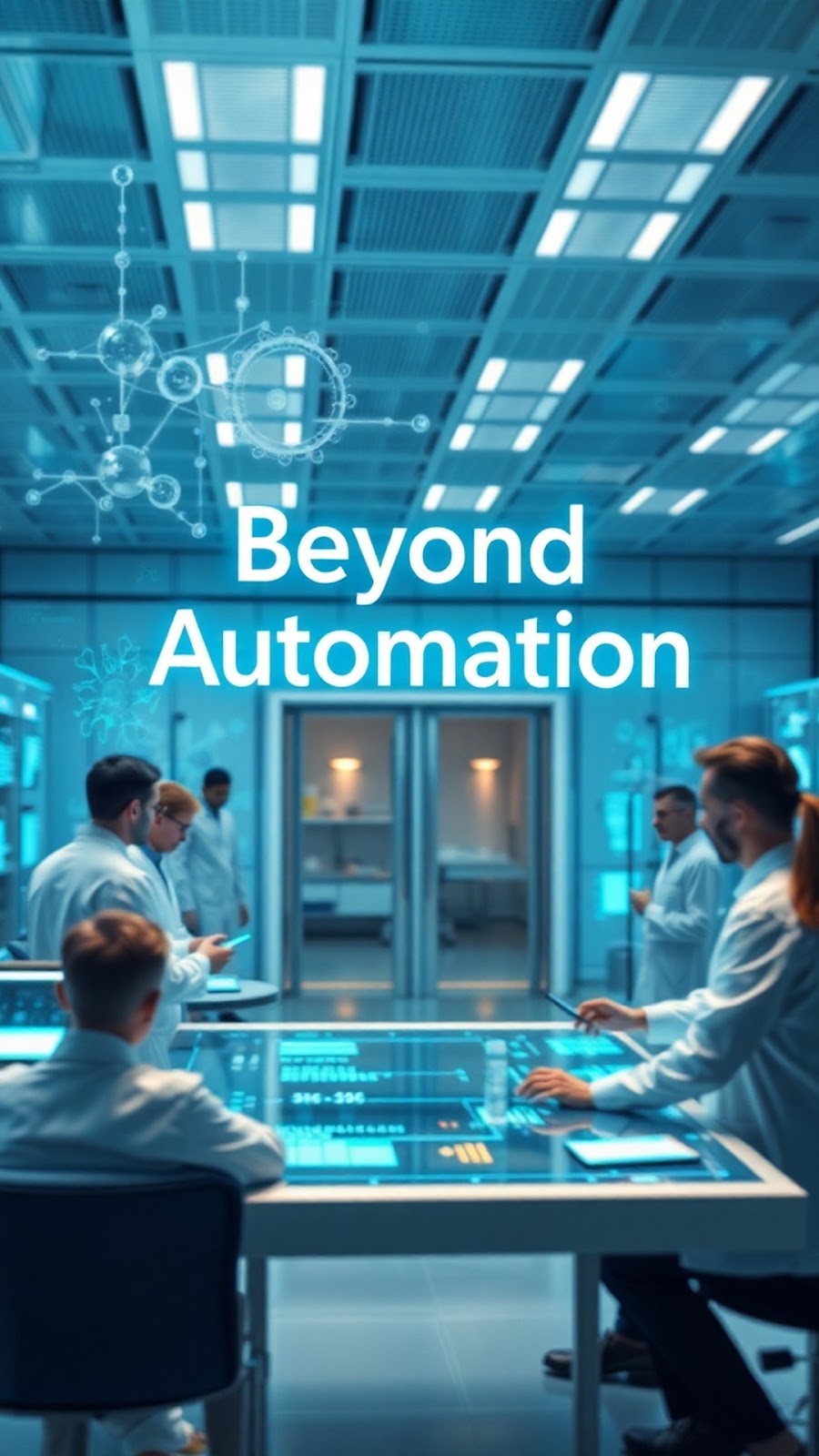
AI's Next Leap: Beyond Automation
As a CEO who has navigated the choppy waters of technological evolution for decades, I’ve seen waves of innovation reshape industries. But the current tide of Artificial Intelligence isn’t just another ripple; it’s a tsunami. And as we stand at its crest, it’s crucial we look beyond the immediate, often-hyped, promise of automation and peer into the profound, transformative future AI is unlocking.
The Illusion of Just 'Doing More'
For too long, the conversation around AI has been dominated by efficiency gains – chatbots handling customer queries, algorithms optimizing supply chains, robots performing repetitive tasks. These are undoubtedly valuable. They are the low-hanging fruit, the initial tremors of AI's power. But to fixate solely on automation is to misunderstand the fundamental shift underway. AI is not just about doing existing tasks faster or cheaper; it’s about fundamentally reimagining what is possible.
Consider the leap from early spreadsheets to sophisticated financial modeling software. The latter didn’t just automate calculations; it enabled entirely new levels of strategic analysis and risk assessment. AI is poised to deliver a similar, albeit far grander, transformation across every facet of business and society.
Unlocking Human Potential, Not Replacing It
My core conviction, forged through countless strategic planning sessions, is that AI’s true power lies in its ability to augment, not annihilate, human capability. We're not building machines to replace our workforce; we're building intelligent partners to amplify our collective genius.
- Augmented Creativity: Imagine designers collaborating with AI to generate thousands of design iterations in minutes, freeing them to focus on artistic direction and emotional resonance.
- Accelerated Discovery: In R&D, AI is already sifting through vast datasets to identify novel drug compounds or material properties, dramatically shortening innovation cycles. Think of how DeepMind’s AlphaFold revolutionized protein folding prediction – a monumental leap enabled by AI.
- Personalized Experiences: From education to healthcare, AI can tailor learning paths or treatment plans to individual needs, moving beyond one-size-fits-all solutions. Netflix’s recommendation engine is a rudimentary example; the future is far more nuanced.
The Strategic Imperative: Building for Intelligence
For CEOs, this shift demands a strategic reorientation. We must move from thinking about AI as a tool for cost reduction to seeing it as a catalyst for value creation and competitive advantage. This requires a proactive, rather than reactive, approach.
1. Cultivate an AI-First Mindset: Your organization’s culture must embrace experimentation and learning. This means fostering curiosity, investing in continuous upskilling, and accepting that some initiatives will fail – that’s part of the learning process.
2. Invest in Data as Your Core Asset: AI thrives on data. Organizations that haven't prioritized data governance, quality, and accessibility will find themselves at a significant disadvantage. Think of data not just as a byproduct of operations, but as the fuel for your intelligence engines.
3. Focus on Augmentation, Not Just Automation: When evaluating AI solutions, ask: How does this empower my people? How does it unlock new capabilities? How does it enable us to solve problems we couldn’t before?
4. Ethical AI is Non-Negotiable: As AI’s influence grows, so too does our responsibility. Building trust requires a robust ethical framework. Transparency, fairness, and accountability must be baked into your AI strategy from the outset.
Future Gazing: The AI-Powered Enterprise
What does the AI-powered enterprise of tomorrow look like? I envision:
- Hyper-Personalized Business Models: Companies that can dynamically adapt their products, services, and even pricing in real-time based on individual customer needs and market shifts.
- Predictive Operational Excellence: AI that not only identifies issues before they occur but proactively recommends and implements solutions, minimizing downtime and maximizing resource utilization.
- Human-AI Collaboration at Scale: Integrated teams where human intuition and strategic judgment are seamlessly blended with AI’s analytical power and processing speed, leading to breakthroughs we can only dream of today.
Take the pharmaceutical industry. Companies like Moderna and Pfizer have leveraged AI to accelerate vaccine development at an unprecedented pace. This isn’t just automation; it’s intelligent acceleration of life-saving innovation.
The Call to Action: Lead the Intelligent Revolution
The advent of advanced AI is not a distant prospect; it is here, now. As leaders, we have a profound opportunity – and a critical responsibility – to steer this revolution. We must move beyond the immediate efficiencies and embrace the immense potential AI offers to augment human ingenuity, solve complex global challenges, and build organizations that are not just competitive, but truly intelligent.
The future belongs to those who can harness this power, not just to do more, but to achieve more. To innovate bolder, to understand deeper, and to lead with unparalleled vision. The time to build that future is now.
Comments
Post a Comment