link here The Ultimate n8n AI Automation Guide is a practical, step-by-step guide to building powerful AI-powered workflows with n8n — without requiring advanced coding skills . Automation is no longer just for developers. With n8n and modern AI tools, you can connect applications, process information, generate content, automate repetitive tasks, and build intelligent workflows that work for you around the clock. This book takes you from the fundamentals of workflow automation to building more advanced AI-powered systems. Instead of focusing only on theory, it emphasizes practical concepts, real-world use cases, and repeatable systems that you can adapt to your own projects, business, or daily workflow. What You’ll Learn Understand how n8n works and how to think in workflows Build automated workflows from scratch Connect different apps, services, APIs, and data sources Integrate AI into your automation workflows Automate repetitive business and productivity tasks Work with trigg...
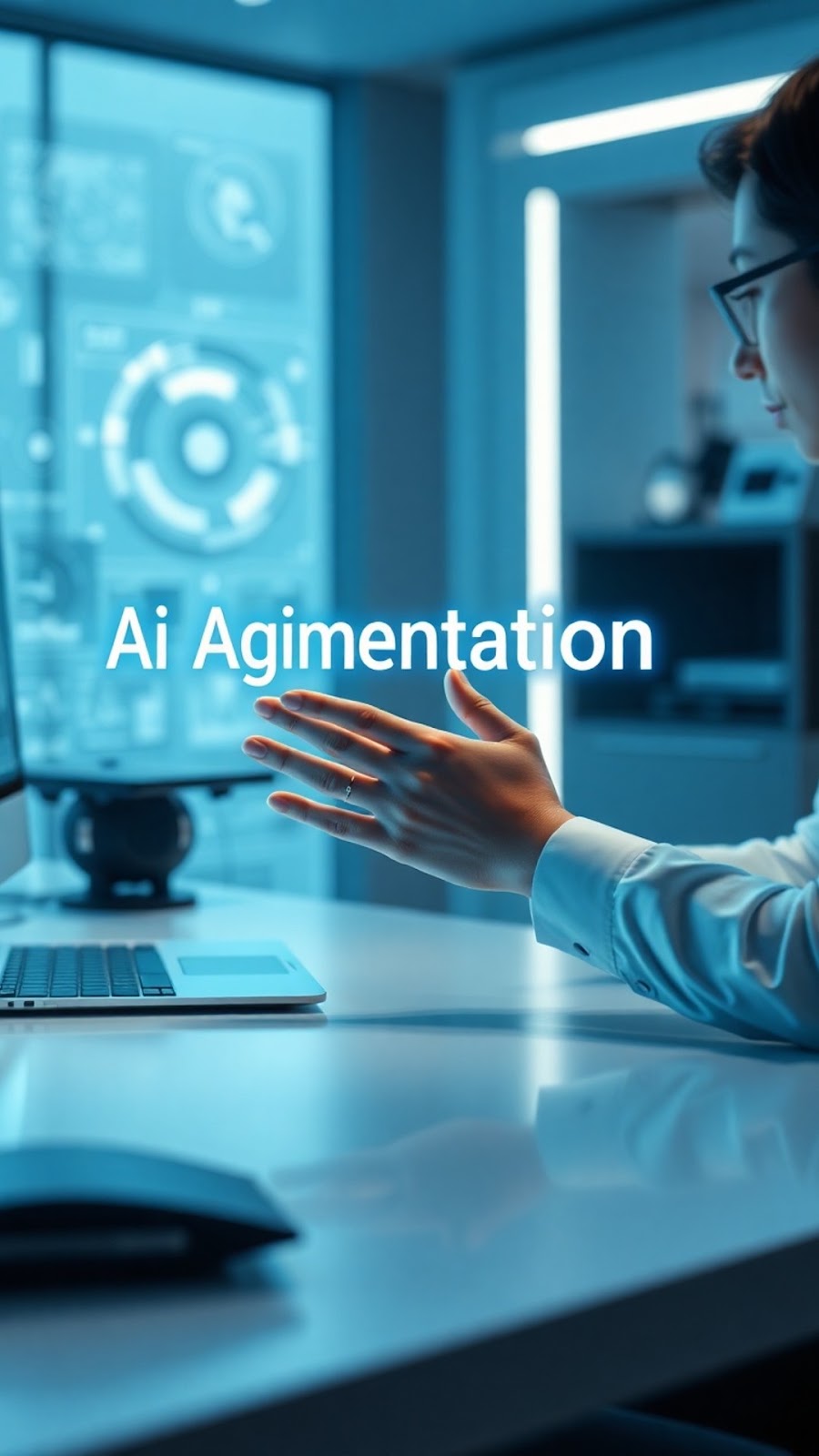
AI's Next Leap: Beyond Automation to Augmentation
For years, the conversation around Artificial Intelligence has been dominated by automation. We’ve seen AI replace repetitive tasks, optimize supply chains, and even handle customer service inquiries. This is undoubtedly valuable, driving efficiency and cost savings across industries. But as a CEO who has navigated multiple technological shifts, I can tell you this: we're on the cusp of something far more profound. The true revolution isn't just about what AI can do for us, but what it can help us become.
From Tools to Partners: The Augmentation Era
The shift I'm referring to is from AI as a tool to AI as a genuine partner – a concept I call 'Augmentation.' Instead of simply offloading tasks, augmented intelligence empowers humans to perform their jobs better, faster, and with greater insight. Think of it as upgrading our own cognitive capabilities, rather than just outsourcing them.
Consider the medical field. AI is already excelling at analyzing vast datasets of patient information, identifying subtle patterns that might escape the human eye. This isn't replacing doctors; it's augmenting their diagnostic abilities. A radiologist, for instance, can now leverage AI to flag potential anomalies in scans with incredible accuracy, freeing them to focus on complex cases and patient interaction. This leads to earlier diagnoses, more personalized treatments, and ultimately, better patient outcomes.
In creative industries, AI is moving beyond generating simple content. Tools are emerging that can assist writers by suggesting plot twists, help designers explore thousands of visual concepts in minutes, or aid musicians in composing intricate harmonies. The human creative spark remains essential, but AI amplifies it, breaking through creative blocks and accelerating the iterative process.
The Strategic Imperative for CEOs
For us as leaders, embracing this augmentation era isn't optional; it's a strategic imperative. We must fundamentally rethink our organizational structures, talent development, and even our core business models to harness this new paradigm.
Rethinking Our Workforce
This means investing heavily in upskilling and reskilling our employees. The jobs of the future won't be about performing tasks that AI can automate. They will be about:
- Critical Thinking & Problem Solving: Identifying complex issues that AI can then help to dissect and solve.
- Creativity & Innovation: Generating novel ideas and approaches that AI can help to refine and execute.
- Emotional Intelligence & Interpersonal Skills: The uniquely human abilities to lead, empathize, and collaborate.
- AI Collaboration & Prompt Engineering: Learning how to effectively communicate with and direct AI systems to achieve desired outcomes.
At my company, we’ve implemented extensive training programs that focus on these areas. We're not just teaching people how to use new AI tools; we're teaching them how to think *with* AI. The results have been remarkable, fostering a culture of continuous learning and innovation.
Building an Agile AI Ecosystem
Furthermore, we need to cultivate an agile AI ecosystem. This involves:
- Strategic Partnerships: Collaborating with AI technology providers and research institutions.
- Data Governance: Establishing robust frameworks for data privacy, security, and ethical AI usage.
- Iterative Development: Adopting a lean, agile approach to deploying and refining AI solutions within the organization.
- Feedback Loops: Creating mechanisms for continuous feedback from employees and customers to improve AI performance.
This isn't about buying off-the-shelf AI solutions; it's about building a comprehensive strategy that integrates AI seamlessly into our operations and decision-making processes.
Future Predictions: The Augmented Enterprise
Looking ahead, I envision the 'Augmented Enterprise' becoming the norm. These organizations will be characterized by:
- Hyper-Personalization: AI will enable us to deliver incredibly tailored experiences to customers, employees, and partners.
- Predictive Decision-Making: Businesses will move from reactive to proactively anticipating market shifts, customer needs, and operational challenges.
- Democratized Expertise: Specialized knowledge, previously held by a few experts, will be accessible to a broader range of employees, empowering them to contribute at a higher level.
- Enhanced Human Potential: The ultimate outcome will be organizations where human ingenuity and AI capabilities work in concert, unlocking unprecedented levels of productivity, creativity, and impact.
Actionable Insights for Today
So, what can you do, as a leader, to prepare for this future?
- Educate Yourself and Your Team: Stay abreast of AI advancements, not just the hype, but the practical applications.
- Identify Augmentation Opportunities: Look for areas where AI can enhance, not just replace, human capabilities. Start with pilot projects.
- Invest in Human Capital: Prioritize training and development that focuses on critical thinking, creativity, and AI collaboration.
- Foster an Experimentation Culture: Encourage your teams to explore and test AI solutions, understanding that not every initiative will be a runaway success.
- Champion Ethical AI: Ensure that your AI deployments are fair, transparent, and aligned with your company’s values.
The transition to an augmentation-driven future is a journey, not a destination. It requires foresight, investment, and a commitment to evolving our understanding of what's possible when humans and intelligent machines work together. The organizations that embrace this shift will not only survive but thrive, leading the next wave of innovation and shaping the future of business.
The future of business is not about AI replacing humans, but about humans and AI augmenting each other. Are you ready to lead that future?
Comments
Post a Comment