link here The Ultimate n8n AI Automation Guide is a practical, step-by-step guide to building powerful AI-powered workflows with n8n — without requiring advanced coding skills . Automation is no longer just for developers. With n8n and modern AI tools, you can connect applications, process information, generate content, automate repetitive tasks, and build intelligent workflows that work for you around the clock. This book takes you from the fundamentals of workflow automation to building more advanced AI-powered systems. Instead of focusing only on theory, it emphasizes practical concepts, real-world use cases, and repeatable systems that you can adapt to your own projects, business, or daily workflow. What You’ll Learn Understand how n8n works and how to think in workflows Build automated workflows from scratch Connect different apps, services, APIs, and data sources Integrate AI into your automation workflows Automate repetitive business and productivity tasks Work with trigg...
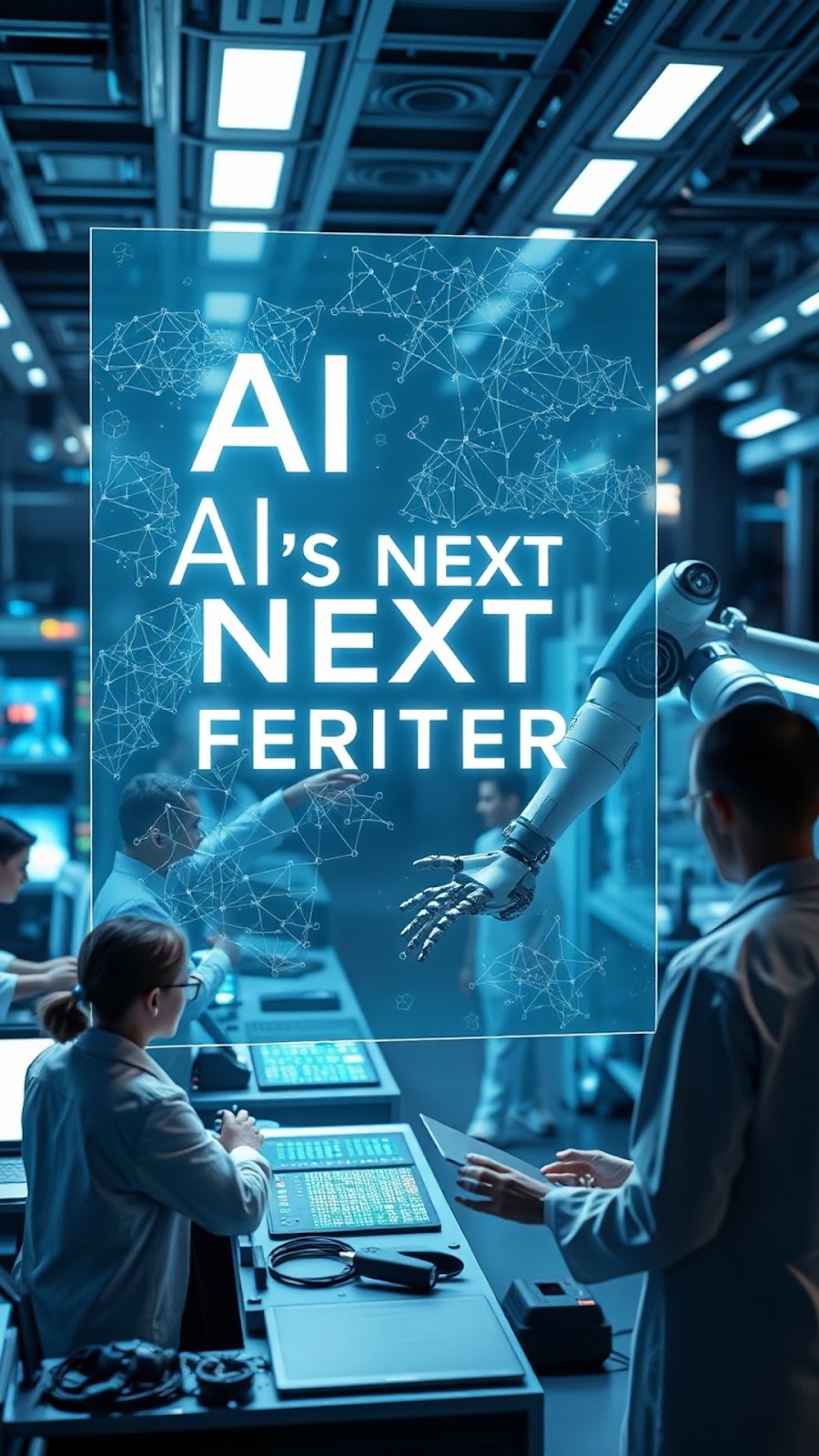
AI's Next Frontier: Beyond Automation
As a CEO who has navigated the choppy waters of technological disruption for two decades, I’ve witnessed firsthand how innovation can reshape industries. Today, the conversation isn't just about *if* Artificial Intelligence will transform our businesses, but *how profoundly* and *how quickly*. We've moved past the initial hype cycle of basic automation. The real revolution, the one that will define the next decade, lies in AI’s emergent ability to foster genuine creativity, strategic foresight, and a deeper understanding of human intent. This is AI’s next frontier, and it demands our immediate, strategic attention.
From Tools to Collaborators
For years, AI was primarily viewed as a sophisticated tool – a means to an end. Think of algorithms optimizing supply chains, chatbots handling customer queries, or predictive analytics forecasting market trends. These applications are undoubtedly valuable, driving efficiency and cost savings. However, the new generation of AI is demonstrating capabilities that transcend mere task execution. We're seeing AI systems that can:
- Generate novel content: From marketing copy and code to architectural designs and musical compositions, AI is becoming a co-creator.
- Uncover non-obvious insights: AI can sift through vast datasets to identify patterns and connections that human analysts might miss, leading to breakthrough discoveries.
- Simulate complex scenarios: Advanced AI can model the ripple effects of strategic decisions, allowing for more robust risk assessment and planning.
This shift transforms AI from a silent assistant into a proactive collaborator. It’s no longer just about doing things faster; it’s about doing things *differently*, pushing the boundaries of what we thought possible.
The Strategic Imperative: Embracing Generative AI
The most potent manifestation of this new frontier is generative AI. Tools like ChatGPT, Midjourney, and others are democratizing sophisticated creative and analytical processes. For leaders, this presents a profound strategic imperative. We cannot afford to be passive observers. Instead, we must actively explore and integrate these capabilities into our core operations.
Consider how a marketing team might leverage generative AI. Instead of spending weeks brainstorming campaign concepts and drafting copy, they can now generate dozens of compelling options in minutes. This frees up human marketers to focus on the higher-level strategy: understanding audience nuances, refining brand voice, and crafting truly resonant narratives. The AI handles the heavy lifting of ideation and initial creation, accelerating the feedback loop and enabling more agile campaign development.
Future Predictions: A Symbiotic Partnership
Looking ahead, I envision a future where human and AI collaboration becomes increasingly seamless. Our competitive advantage will hinge not on who has the most advanced AI, but on who can most effectively harness its potential through human ingenuity. We will see:
- Hyper-personalized experiences at scale: AI will enable us to tailor products, services, and communications to individual customer needs with unprecedented granularity.
- Radical innovation cycles: The pace of discovery and product development will accelerate dramatically as AI aids in research, design, and testing.
- Democratized expertise: Complex analytical and creative tasks, once requiring highly specialized skills, will become accessible to a broader range of professionals.
Imagine a pharmaceutical company using AI to rapidly identify promising drug candidates from millions of molecular compounds, dramatically shortening the path to life-saving treatments. Or a financial services firm using AI to detect sophisticated fraud patterns in real-time, protecting clients and maintaining market integrity.
Actionable Insights: Navigating the AI Revolution
For CEOs and leaders, the path forward is clear, though not without its challenges. Here’s how we can proactively position our organizations:
- Cultivate an AI-first mindset: Foster a culture that embraces experimentation and sees AI not as a threat, but as an opportunity for growth and enhancement.
- Invest in upskilling and reskilling: Equip your workforce with the knowledge and skills to work alongside AI, focusing on critical thinking, creativity, and strategic oversight.
- Develop robust ethical frameworks: As AI capabilities expand, so too does the responsibility for responsible deployment. Establish clear guidelines for data privacy, bias mitigation, and transparent AI usage.
- Identify strategic AI applications: Don't chase every AI trend. Focus on areas where AI can provide a genuine competitive advantage and solve your most pressing business challenges.
- Foster human-AI synergy: Design workflows that leverage the unique strengths of both humans and AI. Humans excel at empathy, complex problem-solving, and ethical judgment; AI excels at processing speed, pattern recognition, and data analysis.
The integration of AI into our strategic decision-making processes will be paramount. We must move beyond simply using AI to analyze data; we must begin to partner with AI to *create* strategy itself.
The Future is Collaborative
The era of AI as merely an automation engine is rapidly fading. We are entering a new phase, one defined by AI's capacity for generative output, profound insight generation, and intelligent collaboration. The companies that thrive in this future will be those that don't just adopt AI, but reimagine their entire operational and strategic frameworks around this powerful new partnership. The frontier is open, and the most successful leaders will be those who bravely step forward to explore it.
Comments
Post a Comment