link here The Ultimate n8n AI Automation Guide is a practical, step-by-step guide to building powerful AI-powered workflows with n8n — without requiring advanced coding skills . Automation is no longer just for developers. With n8n and modern AI tools, you can connect applications, process information, generate content, automate repetitive tasks, and build intelligent workflows that work for you around the clock. This book takes you from the fundamentals of workflow automation to building more advanced AI-powered systems. Instead of focusing only on theory, it emphasizes practical concepts, real-world use cases, and repeatable systems that you can adapt to your own projects, business, or daily workflow. What You’ll Learn Understand how n8n works and how to think in workflows Build automated workflows from scratch Connect different apps, services, APIs, and data sources Integrate AI into your automation workflows Automate repetitive business and productivity tasks Work with trigg...
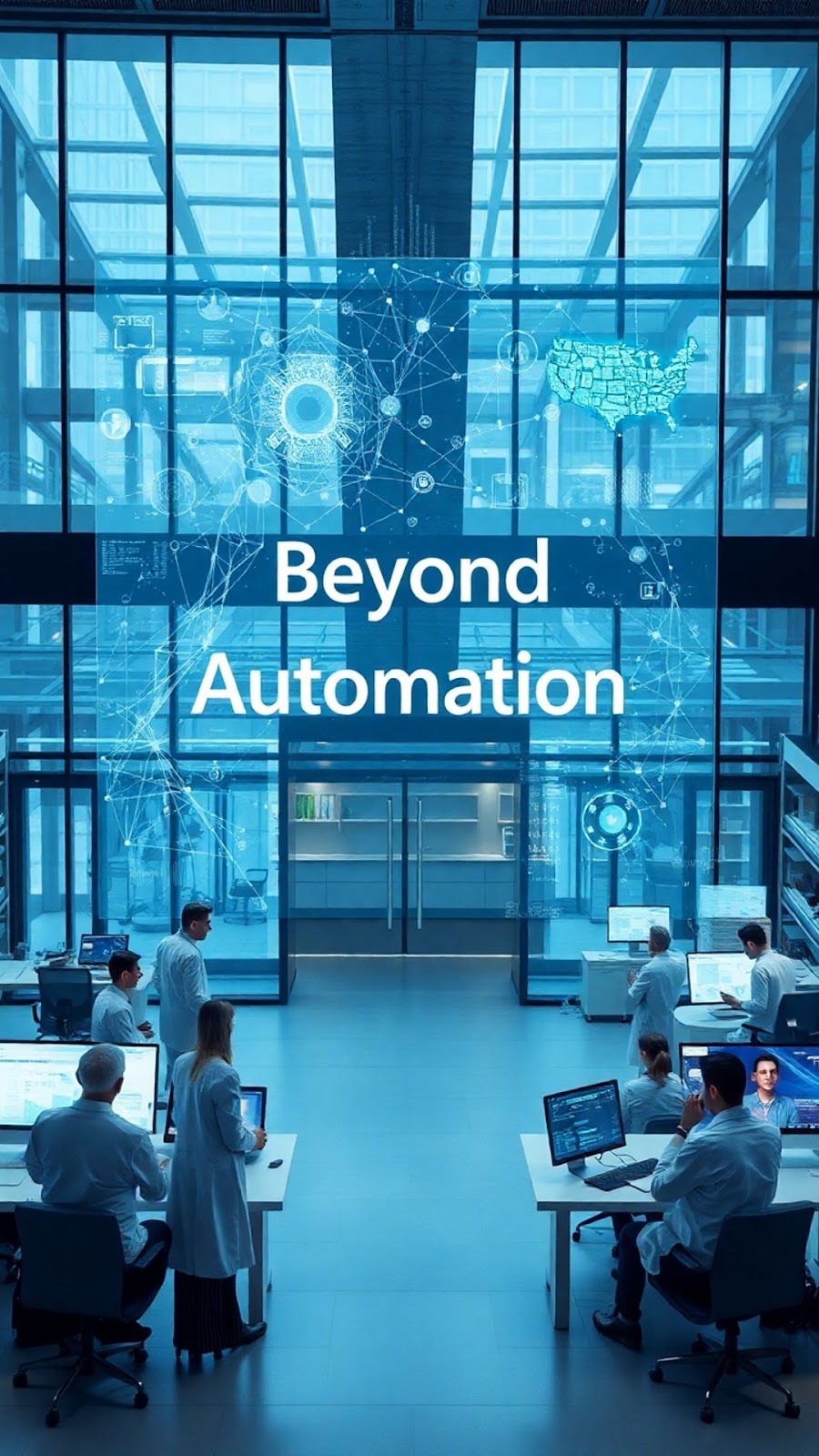
AI's Next Frontier: Beyond Automation
For years, the conversation around Artificial Intelligence has been dominated by one word: automation. And rightfully so. AI has reshaped industries, from optimizing supply chains to personalizing customer experiences, by taking over repetitive, data-intensive tasks. But as a CEO who has navigated multiple technological shifts, I can tell you with absolute certainty: we are standing at the precipice of AI's next, far more profound, frontier. It's not about what AI can *do* for us, but what it can help us *become*.
The Automation Plateau: A Strategic Imperative
We've largely conquered the low-hanging fruit of automation. Many businesses have integrated AI to streamline operations and boost efficiency. The gains are real, measurable, and have been critical for staying competitive. However, relying solely on automation is like a chef who only masters chopping vegetables. It's a fundamental skill, but it doesn't unlock the true art of culinary creation.
The real strategic imperative now lies in leveraging AI for capabilities that were previously beyond human reach – or at least, beyond human scale and speed. This means moving from AI as a tool for task completion to AI as a catalyst for strategic foresight, innovation, and even organizational evolution.
Unlocking Human Potential: The Augmentation Era
The next wave of AI isn't about replacing humans; it's about augmenting them. Think of it as equipping your most brilliant minds with a superpower. This is where the true value lies, and where forward-thinking organizations are already seeing dramatic shifts:
- Accelerated Discovery: In research and development, AI is sifting through vast datasets at speeds unimaginable a decade ago, identifying patterns and potential breakthroughs that human researchers might miss. Consider how AI is accelerating drug discovery, predicting protein folding, and even designing novel materials.
- Hyper-Personalized Strategy: Beyond customer segmentation, AI can now analyze market dynamics, competitor moves, and internal capabilities to suggest nuanced, highly tailored strategic pivots in real-time. This moves us from reactive strategy to proactive, predictive leadership.
- Enhanced Decision-Making: AI can provide leaders with comprehensive, multi-faceted insights, simulating potential outcomes of complex decisions under various scenarios. This isn't about replacing judgment, but about enriching it with data-driven clarity.
- Fostering Creativity: While often seen as a purely human domain, AI can act as a powerful co-creator. Generative AI tools are already assisting designers, writers, and musicians, pushing creative boundaries and sparking new ideas.
Real-World Examples: Pioneers of the Augmentation Era
We're already witnessing this shift in action. Companies like **Nvidia**, though known for their hardware, are at the forefront of AI for simulation and drug discovery, enabling breakthroughs in fields previously constrained by computational limits. In finance, advanced AI models are not just detecting fraud but also identifying subtle market inefficiencies and predicting systemic risks with remarkable accuracy.
In healthcare, AI is moving beyond diagnostics to personalize treatment plans, predict patient outcomes, and optimize hospital resource allocation. This isn't just about efficiency; it's about saving lives and improving quality of care on an unprecedented scale.
Future Predictions: The AI-Infused Organization
Looking ahead, I foresee organizations becoming intrinsically AI-infused. This won't be a separate department or a set of tools; it will be embedded into the very fabric of how we operate, strategize, and innovate.
- AI as a Strategic Advisor: Imagine your executive team having an AI advisor that continuously monitors global trends, competitive landscapes, and internal performance, flagging opportunities and risks with actionable recommendations.
- Democratized Expertise: AI will democratize specialized knowledge, making advanced analytical capabilities accessible to a broader range of employees, empowering them to contribute at a higher strategic level.
- Continuous Organizational Learning: AI will enable organizations to learn and adapt at an exponential pace, identifying what works, what doesn't, and proactively adjusting strategies and operations in a dynamic global environment.
Actionable Insights for CEOs: Navigating the Transition
For CEOs, this transition requires a proactive and strategic approach. It’s not an 'if' but a 'how' and a 'when'. Here’s what I recommend:
- Reframe Your AI Vision: Move beyond automation to augmentation. Ask yourselves: How can AI amplify the intelligence and creativity of my team?
- Invest in Talent and Culture: Upskill your workforce. Foster a culture of continuous learning and experimentation. Encourage employees to collaborate *with* AI, not just use it.
- Prioritize Ethical AI: As AI becomes more integrated, ethical considerations around bias, transparency, and accountability become paramount. Establish robust governance frameworks now.
- Foster Cross-Functional Collaboration: Break down silos. The most impactful AI applications often emerge from the intersection of different departments and diverse perspectives.
- Embrace Experimentation: Not every AI initiative will be a home run. Create safe spaces for experimentation, learn from failures, and iterate rapidly.
The Next Era of Leadership
The future of business is not simply about adopting AI; it's about evolving with it. It's about building organizations that are more intelligent, more adaptive, and more capable of tackling the complex challenges of tomorrow. As leaders, our role is to steer this evolution, ensuring that AI serves as a powerful ally in unlocking human potential and driving unprecedented progress. The time to embrace this augmentation era is now.
Comments
Post a Comment