link here The Ultimate n8n AI Automation Guide is a practical, step-by-step guide to building powerful AI-powered workflows with n8n — without requiring advanced coding skills . Automation is no longer just for developers. With n8n and modern AI tools, you can connect applications, process information, generate content, automate repetitive tasks, and build intelligent workflows that work for you around the clock. This book takes you from the fundamentals of workflow automation to building more advanced AI-powered systems. Instead of focusing only on theory, it emphasizes practical concepts, real-world use cases, and repeatable systems that you can adapt to your own projects, business, or daily workflow. What You’ll Learn Understand how n8n works and how to think in workflows Build automated workflows from scratch Connect different apps, services, APIs, and data sources Integrate AI into your automation workflows Automate repetitive business and productivity tasks Work with trigg...
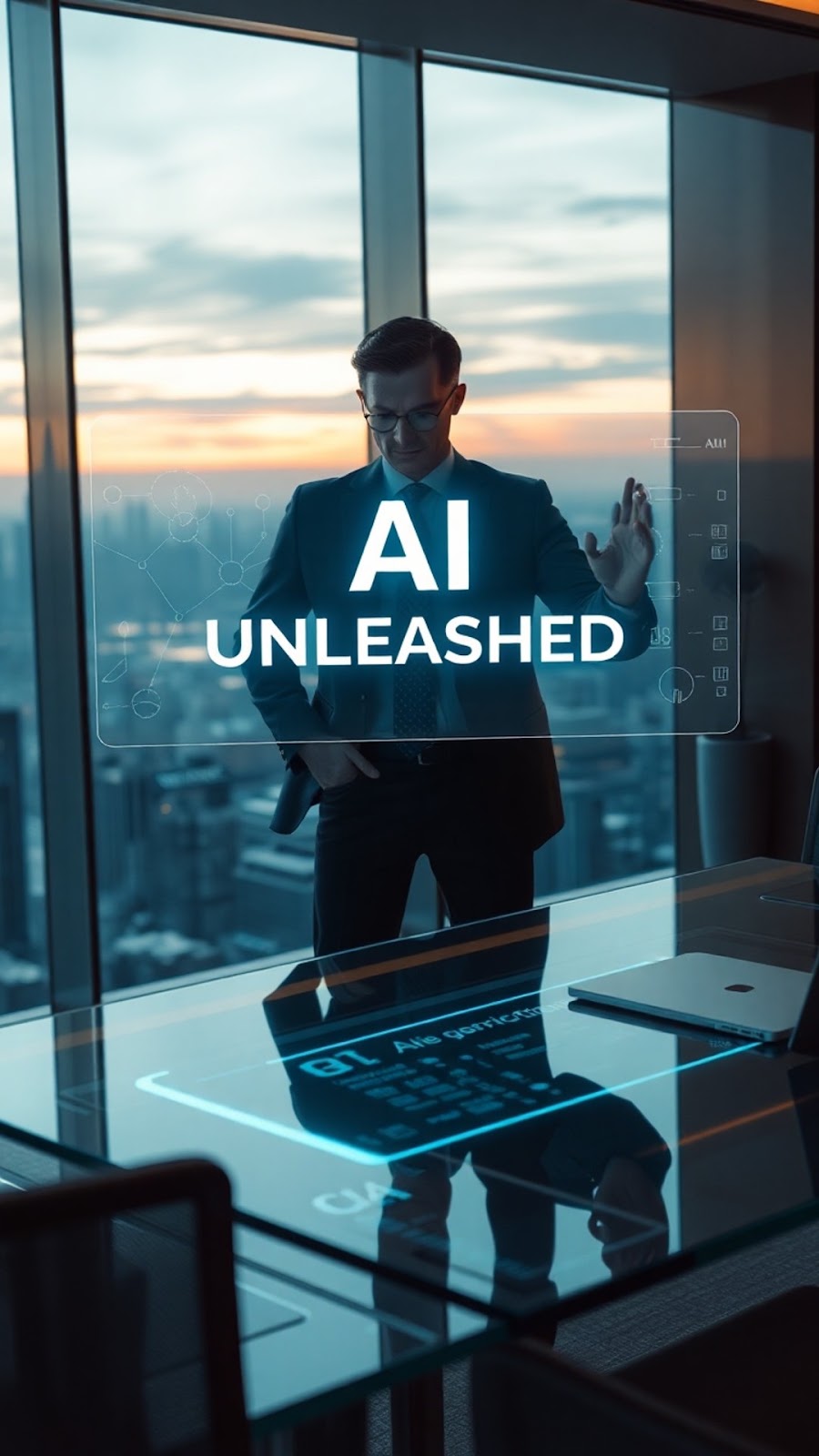
AI Unleashed: The CEO's New Frontier
The hum of artificial intelligence is no longer a distant whisper; it's a roaring symphony that's reshaping industries and redefining leadership. As a CEO, I've witnessed firsthand the seismic shifts technology has brought, but nothing compares to the transformative power of AI. It's not just a tool; it's a fundamental new operating system for business, and those who fail to grasp its implications risk being left in the digital dust.
Navigating the AI Revolution
For years, we spoke of digital transformation. Now, we're in the midst of an intelligent transformation. AI is moving beyond mere automation, permeating every facet of our organizations – from customer engagement and product development to strategic decision-making and operational efficiency. The question is no longer 'if' AI will impact your business, but 'how' and 'how quickly' you can harness its potential.
My team and I have been deeply immersed in exploring AI's capabilities. We've moved from theoretical discussions to practical implementation, and the results have been, frankly, astounding. Consider the realm of customer service. Chatbots powered by advanced AI can now handle complex queries with remarkable accuracy and empathy, freeing up human agents for more nuanced, high-value interactions. Companies like Zendesk and Intercom are at the forefront, demonstrating how AI can elevate customer satisfaction while reducing operational costs.
Strategic Imperatives for the AI-Savvy CEO
Embracing AI isn't just about adopting new software; it requires a profound shift in strategic thinking. Here are the key imperatives I believe every CEO must address:
- Develop a Clear AI Vision: Where do you see AI taking your business in 1, 3, and 5 years? This vision should be aligned with your core business objectives and customer needs.
- Invest in Talent and Upskilling: The future workforce needs to be AI-literate. This means investing in training programs for your existing employees and actively recruiting individuals with AI expertise.
- Prioritize Data Governance and Ethics: AI is only as good as the data it's trained on. Robust data governance, privacy controls, and ethical AI frameworks are non-negotiable.
- Foster a Culture of Experimentation: AI innovation thrives on iteration. Create an environment where experimentation is encouraged, and failures are viewed as learning opportunities.
- Build Strategic Partnerships: You don't have to build everything yourself. Collaborate with AI vendors, research institutions, and even competitors on pre-competitive initiatives.
AI in Action: Real-World Impact
The impact of AI is already tangible. In healthcare, AI is accelerating drug discovery and improving diagnostic accuracy. Companies like DeepMind (now part of Google) have made significant strides in protein folding prediction, a breakthrough with immense implications for medicine. In finance, AI algorithms are detecting fraudulent transactions in real-time, saving institutions billions. Even in traditional manufacturing, AI-powered predictive maintenance is minimizing downtime and optimizing supply chains.
For us, implementing AI in our supply chain logistics was a game-changer. By leveraging machine learning for demand forecasting and route optimization, we've seen a 15% reduction in delivery times and a significant decrease in fuel consumption. This wasn't just about efficiency; it was about enhancing our customer experience and our commitment to sustainability.
Future Predictions: What's Next for AI and Business?
The pace of AI development is accelerating exponentially. Here's what I anticipate:
- Hyper-Personalization at Scale: AI will enable businesses to offer truly personalized experiences to every customer, anticipating their needs before they even express them.
- Generative AI's Creative Leap: Beyond content creation, generative AI will revolutionize product design, simulation, and even scientific research, leading to entirely new categories of innovation.
- AI-Augmented Human Intelligence: The future isn't AI versus humans; it's AI with humans. AI will act as an intelligent co-pilot, augmenting our cognitive abilities and allowing us to achieve more.
- Autonomous Business Operations: We'll see increasingly autonomous business processes, from customer onboarding to complex project management, driven by intelligent AI agents.
Actionable Insights for CEOs
So, what's your immediate call to action? Start small, think big.
- Educate Yourself and Your Leadership Team: Dedicate time to understanding the fundamental principles of AI and its potential applications in your industry.
- Identify Pilot Projects: Choose a specific business problem that AI can solve and launch a pilot project. Focus on tangible outcomes and learn from the experience.
- Assess Your Data Infrastructure: Is your data ready for AI? Invest in modern data platforms and ensure data quality and accessibility.
- Begin Ethical AI Discussions: Proactively address the ethical implications of AI within your organization and establish clear guidelines.
The Unavoidable Truth
The AI revolution is not a distant forecast; it's the present reality. As leaders, our responsibility is to not just understand this shift but to actively shape it. We must be bold, strategic, and human-centric in our approach. The companies that thrive in the coming decade will be those that skillfully integrate AI, not just as a technological advantage, but as a core component of their identity and operational strategy. The future isn't coming; it's being built, brick by intelligent brick, and the CEO is its chief architect.
Comments
Post a Comment