link here The Ultimate n8n AI Automation Guide is a practical, step-by-step guide to building powerful AI-powered workflows with n8n — without requiring advanced coding skills . Automation is no longer just for developers. With n8n and modern AI tools, you can connect applications, process information, generate content, automate repetitive tasks, and build intelligent workflows that work for you around the clock. This book takes you from the fundamentals of workflow automation to building more advanced AI-powered systems. Instead of focusing only on theory, it emphasizes practical concepts, real-world use cases, and repeatable systems that you can adapt to your own projects, business, or daily workflow. What You’ll Learn Understand how n8n works and how to think in workflows Build automated workflows from scratch Connect different apps, services, APIs, and data sources Integrate AI into your automation workflows Automate repetitive business and productivity tasks Work with trigg...
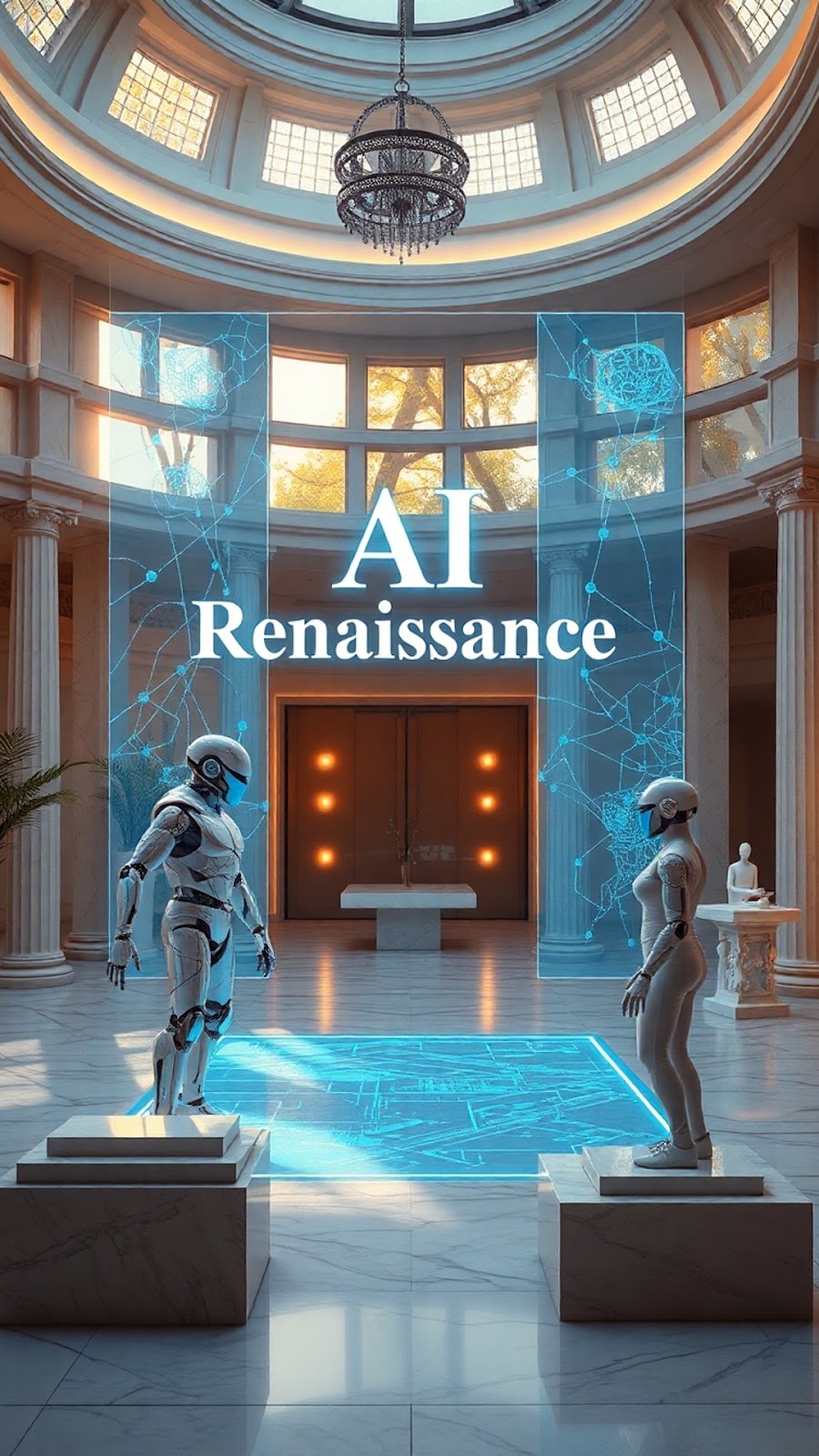
AI Renaissance: Navigating Tomorrow's Innovation
As a CEO who has navigated multiple technological shifts, I’ve witnessed firsthand how nascent ideas can rapidly reshape entire industries. Today, we stand at the precipice of another such revolution, arguably the most profound yet: the Artificial Intelligence renaissance. This isn't just another tech trend; it's a fundamental reimagining of how we work, create, and connect.
The Unfolding AI Landscape
For decades, AI was the stuff of science fiction, a distant promise. Now, it's a tangible force, embedded in our daily lives and rapidly evolving beyond our wildest imaginations. From sophisticated language models that can draft complex legal documents to generative AI creating photorealistic art from simple prompts, the capabilities are staggering. We're moving beyond automation of repetitive tasks to augmentation of human intellect and creativity.
The current wave is characterized by:
- Generative AI's Explosive Growth: Tools like ChatGPT, Midjourney, and DALL-E have democratized content creation, offering unprecedented speed and scale.
- AI-Powered Analytics: Businesses are leveraging AI to derive deeper insights from vast datasets, predicting market trends and customer behavior with uncanny accuracy.
- Personalized Experiences: AI is tailoring everything from e-commerce recommendations to educational content, creating hyper-individualized user journeys.
- AI in Scientific Discovery: In fields like medicine and material science, AI is accelerating research, identifying new drug candidates and novel materials at an accelerated pace.
Beyond Hype: Strategic Imperatives for CEOs
The temptation is to chase every shiny new AI tool. However, true leadership demands a strategic, discerning approach. My focus, and what I urge my fellow CEOs to adopt, is to move beyond mere adoption to integration and innovation.
1. Define Your AI North Star
Before diving headfirst, clearly articulate your business objectives. How can AI genuinely solve your most pressing problems or unlock your greatest opportunities? Is it to enhance customer service, optimize supply chains, accelerate product development, or foster employee creativity? Without a clear ‘why,’ AI initiatives risk becoming expensive experiments.
Example: A large retail chain I advised used AI not just for personalized product recommendations, but to predict inventory needs at a hyper-local level, drastically reducing waste and stockouts. Their North Star was operational efficiency and enhanced customer satisfaction.
2. Cultivate an AI-Ready Culture
Technology is only as effective as the people who wield it. Fostering an AI-ready culture involves:
- Continuous Learning: Invest in upskilling and reskilling your workforce. Employees need to understand how to collaborate with AI, not fear it.
- Ethical Frameworks: Establish robust guidelines for AI deployment, ensuring fairness, transparency, and accountability. Data privacy and bias mitigation are non-negotiable.
- Experimentation Zones: Create safe spaces for teams to experiment with AI tools, encouraging innovation without the pressure of immediate ROI.
3. Embrace Strategic Partnerships
No single company can master every facet of AI. Building strategic partnerships with AI providers, research institutions, and even competitors (in pre-competitive research) can accelerate your learning curve and amplify your impact. We are entering an era of collaborative innovation.
The Future is Collaborative Intelligence
My prediction is that the next phase of AI evolution will be defined by 'collaborative intelligence' – the seamless integration of human ingenuity and AI capabilities. AI will become an indispensable co-pilot, an intelligent assistant that augments our decision-making, amplifies our creativity, and frees us to focus on higher-order strategic thinking and human connection.
Imagine:
- Executives using AI to simulate strategic scenarios with real-time data, identifying unforeseen risks and opportunities.
- Marketing teams co-creating campaigns with generative AI, iterating at lightning speed based on predictive audience response.
- R&D departments using AI to explore novel solutions to global challenges, accelerating breakthroughs in climate change and healthcare.
Actionable Insights for Today
What can you do, starting now?
- Identify Pilot Projects: Start small. Choose a specific business process that can benefit from AI and run a pilot. Learn and iterate.
- Review Your Data Strategy: High-quality, accessible data is the fuel for AI. Ensure your data infrastructure is robust and secure.
- Engage Your Team: Foster open dialogue about AI. Address concerns, highlight opportunities, and empower your people to be part of this transformation.
- Stay Informed, Stay Agile: The AI landscape is moving at an unprecedented pace. Dedicate resources to continuous learning and maintain the agility to pivot your strategy.
The AI renaissance is not a future event; it is here. It presents both immense opportunities and significant challenges. As leaders, our role is to navigate this dynamic terrain with vision, strategy, and a commitment to leveraging this transformative technology for the betterment of our organizations and society. The time to act is not tomorrow, but today.
Comments
Post a Comment